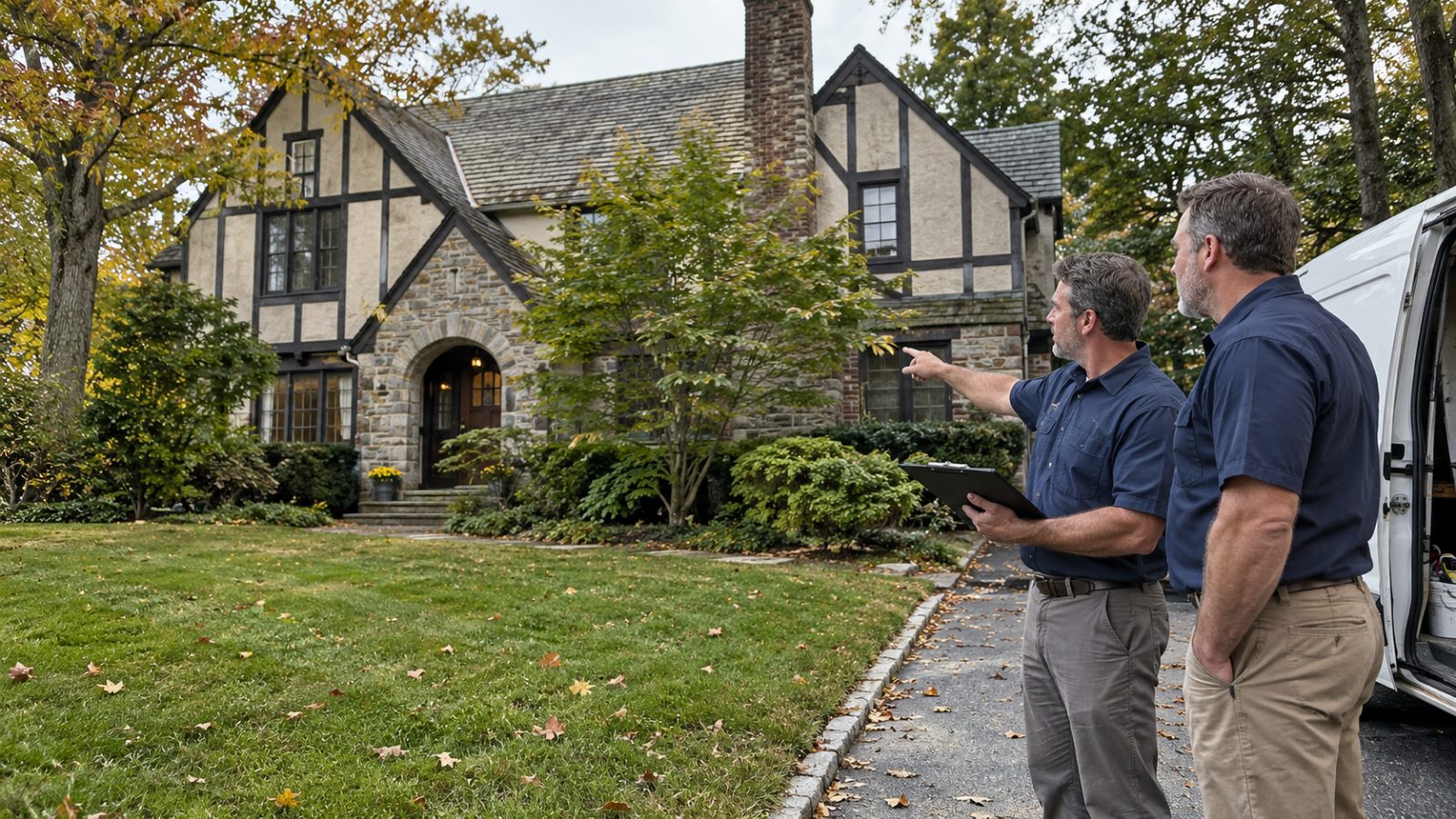
Clear next steps for your home
Asbestos Removal in Scarsdale, NY
Tell us what you have found, and we will help you plan the next step. The estimate is free and there is no obligation.
Clear next steps for your home
Tell us what you have found, and we will help you plan the next step. The estimate is free and there is no obligation.
Finding unfamiliar insulation, old floor tiles, or a questionable ceiling can bring a home project to a stop. Leave suspected asbestos undisturbed, keep people away from damaged material, and do not sweep or use a household vacuum on debris. Arrange professional assessment before continuing work that could disturb it. US EPA
Scarsdale Asbestos Connect helps homeowners organize the next steps for asbestos removal in Scarsdale and nearby Westchester County communities, including White Plains, Eastchester, and Hartsdale. Tell us where the material is, whether you have a laboratory report, and what work you had planned. Our focus is a clear conversation about the affected area, the information still needed, and the questions your written removal proposal should answer. You do not need to know the trade terms before getting in touch, and you should not have to agree to a project you do not understand.
This page walks through each type of project we handle, what drives the price of each one, how a project moves from first question to completed paperwork, and the questions Westchester homeowners ask most often.
Most asbestos questions in Scarsdale begin with a home project rather than an emergency. A kitchen remodel exposes an older floor, a boiler replacement reaches the basement pipes, or an attic conversion runs into a ceiling no one has looked at closely in decades. Residential asbestos removal is the service that brings those separate findings together into one household plan, so you are not managing several disconnected conversations at once.
Many homes in Scarsdale and the surrounding Westchester villages date from the early and middle twentieth century, when asbestos-containing products were widely used in building materials. A home's age is useful background, but it is not a diagnosis. New York's Department of Labor recommends using licensed asbestos contractors with certified workers, and the first job is always to confirm what has actually been identified. Department of Labor
When an assessment finds material in more than one place, keep the proposal organized room by room or area by area rather than accepting a single line such as "asbestos removal, whole house." A clear scope names the basement pipe runs, the kitchen floor, or the hallway ceiling separately, describes the material in each, and states what is excluded. That makes it far easier to compare proposals, approve part of the work now and part later, or adjust the plan when your renovation scope changes.
Material that is in good condition and will not be disturbed does not automatically need to be removed. The EPA advises leaving sound material alone when it is unlikely to be disturbed. We would rather help you match the removal areas to the work you actually intend to do than encourage a larger project than your plans require.
Regulated removal affects how you use the house while the work is under way. Tell us which entrance your family normally uses, which rooms you cannot do without, whether anyone works from home, and whether pets, children, or older relatives need particular consideration. If a tenant, property manager, or co-op board is involved, mention it early. These details belong in the planning conversation before anyone books a start date.
You should also know who is responsible for each part of the job: who assesses the material, who prepares the removal proposal, who performs the regulated work, and who explains completion requirements. Verify the actual contractor's current credentials rather than relying on a website name alone.
Removal is usually one stage of a larger project. Ask what condition each area will be in at handover and what your general contractor, flooring installer, or heating contractor will receive before returning. Replacement finishes, repairs, and painting are normally separate work unless they are expressly written into the agreement.

Textured "popcorn" ceilings and older ceiling tiles are common in Westchester homes that were built or renovated in the mid-twentieth century. Some textured ceiling finishes and ceiling tiles can contain asbestos, and a material's appearance is not enough to confirm what it contains. Do not scrape a suspect ceiling to find out more; arrange professional assessment before any work that would disturb it. NJ.gov
Ceiling questions usually come up for one of three reasons: you want a smooth, modern finish; an electrician or lighting designer needs to open the ceiling for new fixtures; or a leak from an upstairs bathroom or roof has already damaged part of it. Each situation calls for a different conversation, so tell us which one applies and whether another contractor is waiting on the result.
When an assessment identifies asbestos in a textured finish, ask for the removal area to be described by room and surface. The proposal should distinguish the identified finish from the plaster or drywall that supports it, and should note any area still awaiting assessment. A living room with a continuous ceiling into a hallway or stairwell needs clear boundaries so everyone understands where the work stops.
For a tiled ceiling, bring the available report into the discussion and ask which identified components are included: the tiles themselves, any adhesive, and any associated materials named in the report. Basement recreation rooms and finished attics often have tiled ceilings, and access to those spaces affects how the work is planned.
Do not assume that removal includes a repaired, skimmed, primed, or painted ceiling. Ask what the surface will be like at handover and who decides the next preparation steps. Share the proposal with the contractor handling the new finish before approving the job, so you know whether you are buying asbestos removal alone or a package that expressly includes additional work.
Ceilings sit above furniture, flooring, and fixtures, so ask how belongings will be handled, which rooms will be closed off, and how long the household will be without the affected space. Those answers matter as much as the removal itself.

Old nine-inch vinyl tiles in a basement, a patterned kitchen floor hidden under newer flooring, or sheet flooring in a mudroom are some of the most common reasons Scarsdale homeowners get in touch. Planning to replace older floor tiles? Do not sand or grind suspected asbestos flooring or its backing to prepare the surface. The EPA specifically advises against sanding or trying to level asbestos flooring. US EPA
Do not lift tiles to collect information for an estimate. Start with any existing report and a description of the room, how large it is, and what your flooring installer expects to find when they arrive.
Some floor tiles and the adhesive beneath them can contain asbestos. A finding about one material should not be treated as a finding about every layer of the floor. Ask the assessor and the removal contractor to connect the proposal to the specific materials identified in the report: the tile, the adhesive, any backing, and any older layer underneath a newer floor.
Start with the room boundaries and the flooring area that has been assessed. Explain whether the project includes closets, a landing, or a connected hallway that you expect to receive new flooring. The estimate should make clear which identified tiles are included and what lies outside the agreed work, in language another person could follow without relying on a conversation from weeks earlier.
Discuss the furniture, appliances, and stored belongings that normally occupy the space, but leave preparation instructions to the responsible contractor. Kitchens in particular need a plan for cabinets, appliances, and how the household will manage meals while the room is unavailable.
Ask what the surface will look like at handover and what your flooring installer will receive before returning to begin the next stage. Leveling, patching, and installing the new floor are usually separate work unless they are written into the agreement.

Many older Westchester homes still have their original heating pipes running through the basement, often wrapped in white or grey insulation. Older pipe insulation may contain asbestos, and damaged material needs professional attention. Do not pull it away, brush it, or attempt a household cleanup of fallen debris; keep the area undisturbed while arranging an assessment. U.S. Consumer Product Safety Commission
Pipe insulation often becomes urgent because a boiler or furnace is being replaced, a plumber needs to reroute lines, or a basement is being finished. Tell us whether a plumber or heating contractor is waiting to begin, and share any report without touching the insulation to measure or inspect it.
For visible pipework, describe the part of the basement involved and share any assessment that marks the included runs. The proposal should be clear about where the work begins and ends, including any sections that remain outside the agreement or need further evaluation. Ask the contractor to confirm quantities and boundaries rather than trying to reach the insulation yourself.
When a report identifies insulation around particular fittings, elbows, or connections, ask that those locations be named in the removal proposal. Do not assume a general description of "basement pipes" covers every fitting you care about. Pipework that passes behind walls, above finished ceilings, or into crawl spaces should be discussed separately, because access affects both the plan and the price.
Westchester winters make heating timing a real consideration. Ask how the work will be sequenced with your heating contractor, whether the system will need to be off, and what the plumber or heating contractor will receive before they take over. A clear handover point keeps the next stage of the project from stalling.
Think about the room beneath the pipework as well: its normal use, stored belongings, and the route people take through it. Ask who is responsible for preparing the area and what restrictions will apply during the work.

Cement shingle siding was a popular choice on mid-century houses, garages, and outbuildings across Westchester County. Some cement siding contains asbestos, but appearance alone does not establish a material's asbestos content. New York's Department of Labor recommends professional sampling and analysis for a reliable determination. Department of Labor
Siding projects usually start with a plan to re-side the house, add an extension, or replace damaged sections. Tell us whether the work concerns one wall, several elevations, or a detached garage, and share the replacement contractor's intended scope. Do not break, drill, or remove siding pieces to prepare an estimate request.
For a project involving whole exterior walls, ask for each included elevation to be named and described. The fact that work is outdoors does not remove the need to control disturbance of asbestos-containing siding. Your proposal should follow agreed boundaries and identify any excluded section, rather than relying on a general description such as "exterior siding."
A limited project, such as opening one wall for an addition or a new window, still needs a clear description of the included material and the reason for removing it. Ask how the edges of the removal area will be handled and how the remaining siding will be protected.
Exterior work depends on access. Discuss driveways, landscaping, fences, entrances the household uses, and how close the work is to a neighboring property. Ask the contractor to explain the proposed sequence and who is responsible for weather protection between removal and the installation of new siding. Assign those responsibilities in writing so the handover is understood by everyone involved.

We do not publish average prices, because every project depends on what has been identified and where it is. The table below shows the main factors that shape the price of each type of job. Your price comes from a free on-site estimate based on your property.
| Service / job type | Main price factors | Price |
|---|---|---|
| Residential asbestos removal (several areas) | Number of areas, materials identified, total quantity, household access needs, testing and air sampling, waste disposal, permits and notifications | Free on-site estimate |
| Ceiling removal (textured finish or tiles) | Ceiling area, material type, room height and access, furniture and fixtures, containment needed, testing, disposal | Free on-site estimate |
| Floor tile removal | Floor area, tile and adhesive layers identified, older layers underneath, room access, testing, disposal | Free on-site estimate |
| Pipe insulation removal | Length of pipe runs, number of fittings and elbows, access (open basement, behind walls, crawl spaces), heating coordination, testing, disposal | Free on-site estimate |
| Siding removal | Wall area and number of elevations, building height and access, ground protection, testing, disposal, permits | Free on-site estimate |
Ask whether independent air sampling, waste transportation and disposal, permits, and any restoration work are included or billed separately. Where project air sampling is required under New York's asbestos rules, it must be performed by an independent air-sampling firm rather than the abatement contractor. Department of Labor
A clear proposal should describe the affected rooms or exterior sections in language you can follow. Ask for the material, approximate quantity, boundaries of the work, and any areas that could not be assessed. A basement, for example, may contain several separate project areas, and your agreement should not leave you guessing which part of the space the price covers.
Talk through what you expect to see at the end of the project. Do you need the area ready for another contractor to inspect, or are you expecting a finished surface? Ask whether replacement flooring, painting, new insulation, siding installation, or repairs are included or excluded. The same applies to moving belongings, managing access, and communicating with other trades.
Ask how waste transportation and disposal will be handled and documented, and who engages any independent air-sampling firm. Keep the assessment, accepted estimate, approved changes, and available completion records together. The goal is a clear record of what was assessed, what was authorized, and what was done.
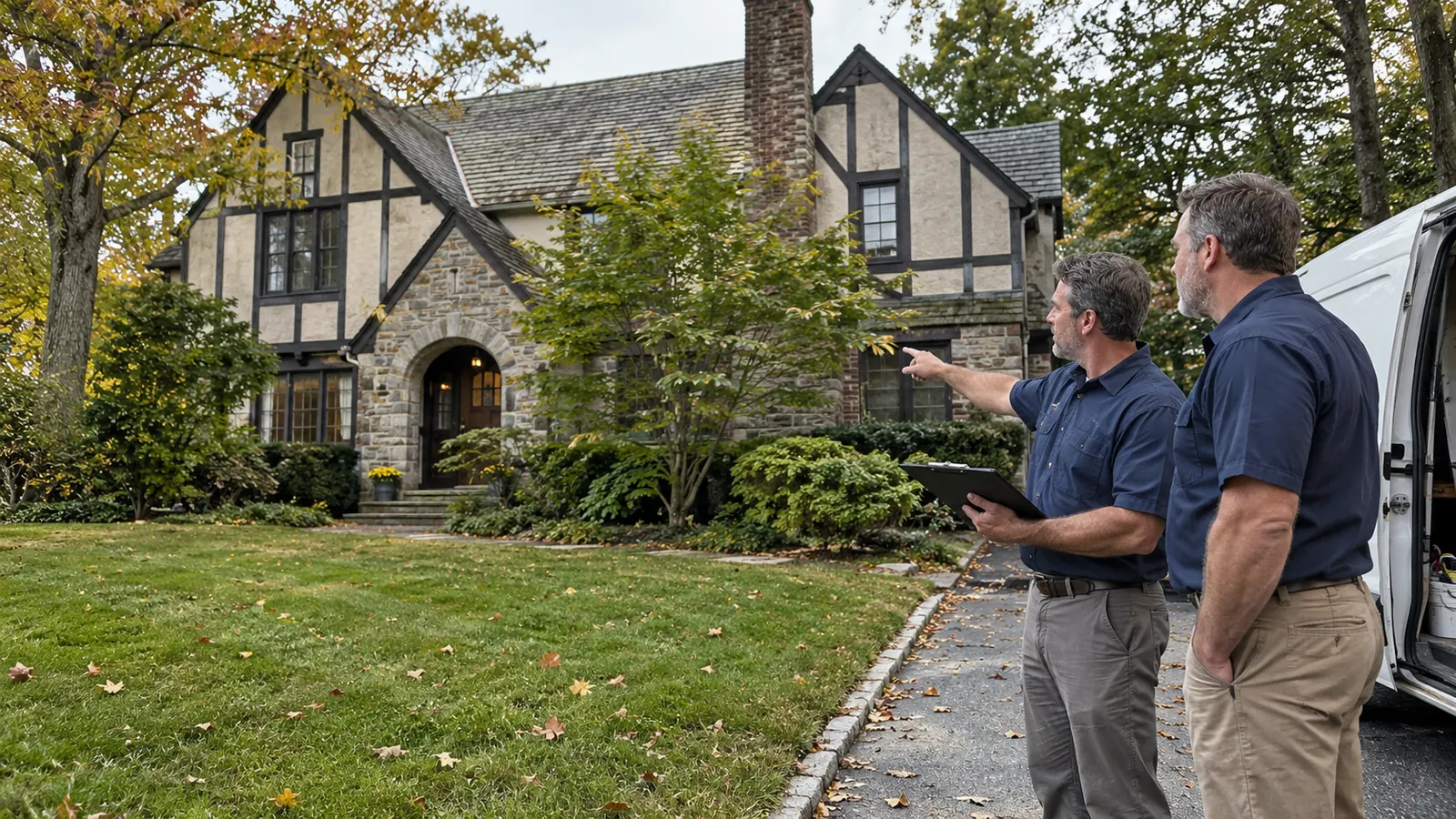
Our service area includes Scarsdale, White Plains, Eastchester, and Hartsdale. Give us the property's full address when you get in touch, along with the type of building and the part of it involved. We do not advertise a staffed office in every community we serve; this is a service-area business.
Scarsdale's official history describes substantial residential growth during the early twentieth century, with many homes from that period still in use. scarsdale.gov A home's age can be useful background, but project discussions should stay grounded in what has actually been assessed and what your renovation will affect.
Tell us about shared driveways, building-management requirements, restricted parking, or an entrance that cannot be blocked. We also want to know which dates are preferences and which are tied to another commitment, such as a floor installation, heating replacement, move, or closing. We do not publish a blanket promise that every project can start immediately or finish within a fixed number of days.
We begin with what you know and what you are trying to achieve. You should understand the reason for the proposed work before deciding whether to approve it.
We encourage written descriptions of included materials, affected areas, and exclusions. That gives you something concrete to compare instead of a price with an unclear scope.
Your access needs, other contractors, and daily routine belong in the conversation. We make room for those questions instead of treating them as details to sort out later.
We do not publish invented project averages, guaranteed start dates, or blanket asbestos-free claims. The written assessment and agreement should support the decisions you make.
Appearance alone is not a reliable way to identify asbestos. Professional sampling and laboratory analysis can establish whether a suspect material contains it; do not break or scrape material to investigate it yourself. Department of Labor
It depends on the material, the area or length involved, access, testing and air sampling, disposal, and any permits. We do not publish averages; see the cost factors table above and request a free on-site estimate for a price based on your property.
No. The EPA advises that material in good condition that will not be disturbed can often be left alone. Removal usually makes sense when material is damaged or when a renovation, repair, or replacement will disturb it.
That depends on where the work is and how the area is isolated. Ask for the proposal to explain which rooms will be unavailable, which entrance to use, and any restrictions for the household during the work.
Usually not, unless the agreement expressly includes it. Ask what condition each area will be in at handover and arrange replacement finishes with the appropriate contractor.
Yes. Verify the company that will actually perform the regulated work through the New York State Department of Labor's asbestos contractor listing, and ask for current documentation before signing. Department of Labor
Your address, the affected area, the work you had planned, any inspection or laboratory report, and any deadline such as a heating replacement or closing date. Do not disturb the material to collect photos or measurements.
Yes. Our listed service area includes White Plains, Eastchester, and Hartsdale as well as Scarsdale. Share your exact address so availability can be discussed.
You do not need every answer before contacting us. Start with your address, the affected area, and any report you already have.
Free — no obligations